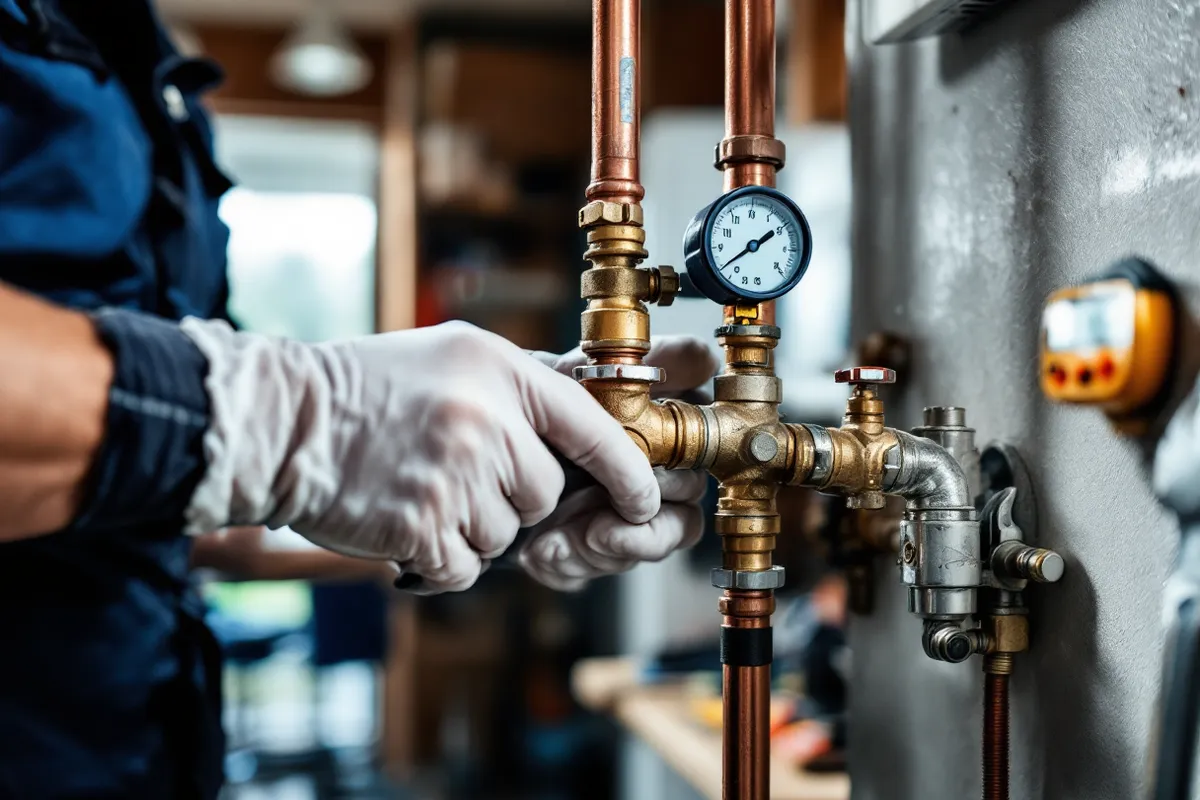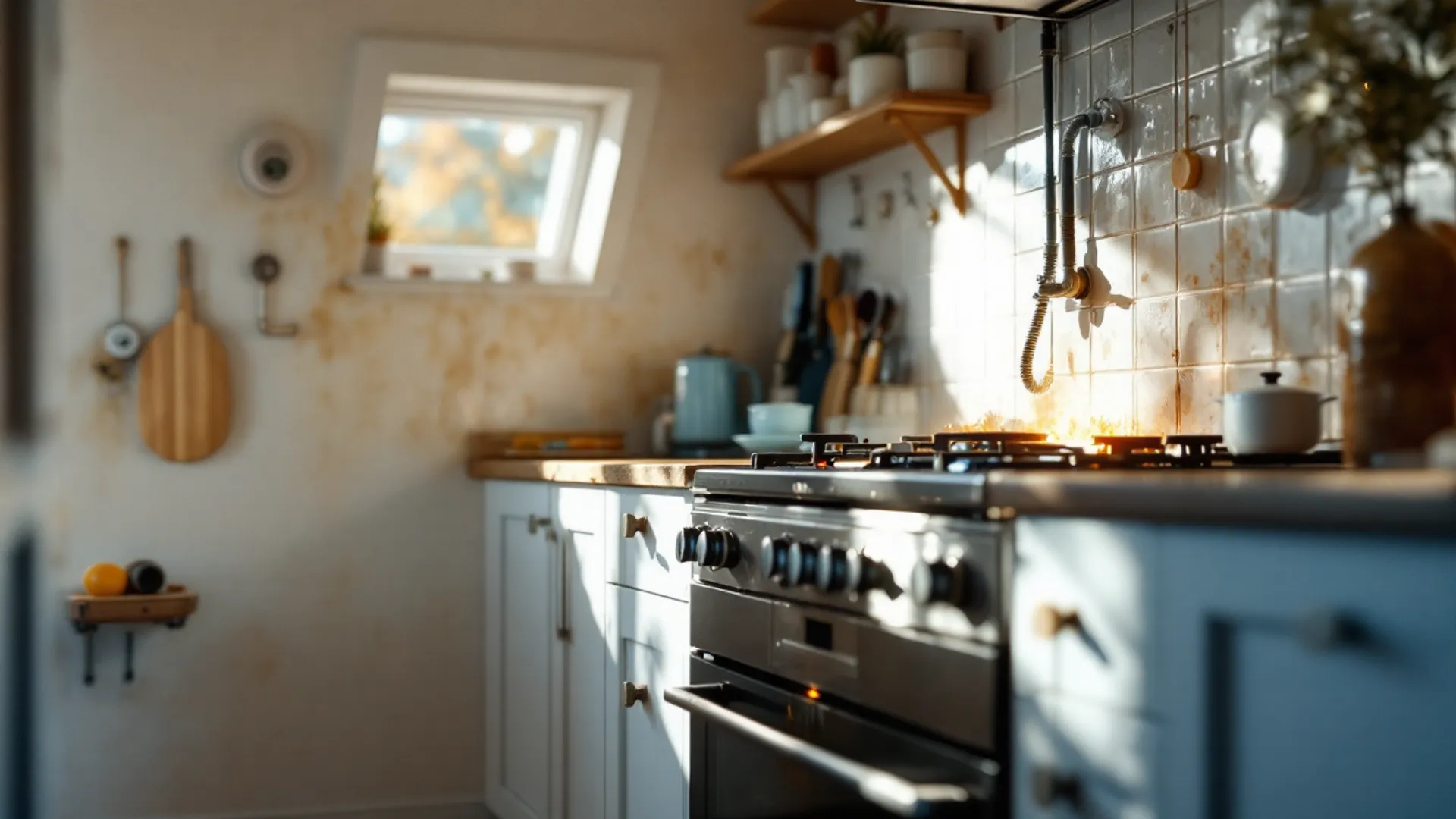
Gas safety is one area of home maintenance where the consequences of getting it wrong are catastrophic. Carbon monoxide (CO) poisoning kills around 50 people in the UK each year and sends thousands more to hospital. Gas explosions, while rare, cause fatalities and destroy properties. Most of these tragedies involve one of three factors: unregistered gas work, inadequate ventilation, or the absence of a working CO alarm.
Gas emergency: what to do right now
However, if you smell gas in your property:
- Don’t operate any switches — electrical sparks can ignite gas
- Don’t smoke or use a lighter
- Open windows and doors to ventilate
- Turn off the gas supply at the meter emergency control valve (a lever valve adjacent to the gas meter — turn it 90° until it’s across the pipe, not inline)
- Get everyone outside
- Call the National Gas Emergency Service: 0800 111 999 (24 hours, free, UK-wide)
- Don’t re-enter the property until the emergency service has attended and confirmed it’s safe
Additionally, the emergency service will attend and make the installation safe. They will not repair your boiler — that’s a Gas Safe registered engineer’s job. But they will ensure the building is safe before you return.
Carbon monoxide: the silent killer
Specifically, carbon monoxide is colourless, odourless, and tasteless. It’s produced when any fuel — gas, oil, coal, wood — burns without enough oxygen. Appliances that are poorly maintained, badly installed, or operating with inadequate ventilation can produce CO in quantities that are dangerous within minutes.
Signs of CO poisoning: For example, - Headache
- Dizziness and nausea
- Breathlessness
- Confusion
- Loss of consciousness
As a result, a key indicator: symptoms improve when you leave the property and return when you come back. If multiple people in the property feel unwell, CO needs suspecting.
Signs of CO production from an appliance: Meanwhile, - Yellow or orange flame instead of blue (for gas appliances)
- Black sooty marks around the appliance
- A boiler that’s been repeatedly cutting out
- Increased condensation on windows
CO detectors: Furthermore, every home with gas appliances should have a CO detector. British Standard EN 50291 is the minimum specification. CO detectors should be:
- Fitted in the same room as the gas appliance, and in every sleeping room if the appliance is in a room next to a bedroom
- Mounted at around head height (CO is approximately the same density as air)
- Tested regularly (press the test button monthly)
- Replaced every 7–10 years (the electrochemical sensor degrades)
In particular, if your CO alarm activates:
- Get everyone outside immediately
- Don’t go back in
- Call 999 if anyone shows symptoms of CO poisoning
- Call the Gas Emergency Service (0800 111 999) if no one is symptomatic but the alarm has activated
Gas Safe registration: the legal requirement
Consequently, any work on a gas supply pipe, meter, or gas appliance (including boilers, hobs. Gas fires) must be carried out by a Gas Safe registered engineer. This is not a voluntary standard — it is a legal requirement under the Gas Safety (Installation and Use) Regulations 1998.
Unregistered gas work: Similarly, - Is illegal
- Invalidates buildings insurance (insurance policies require all gas work to be carried out to legal standards)
- Invalidates boiler warranty
- Creates an unsupported gas installation that may not function safely
Verifying registration: Go to gassaferegister.co.uk and enter the registration number. The result shows whether the engineer is currently registered and what types of gas work they’re qualified to undertake. Check before any work starts — a plumber who does the heating work but subcontracts gas connections to an unregistered colleague is still the homeowner’s problem.
Landlord gas safety obligations
Moreover, landlords (including social landlords and housing associations) are legally required to:
- Have all gas appliances serviced annually by a Gas Safe registered engineer
- Issue the gas safety certificate (CP12) to tenants within 28 days of the check
- Keep gas safety records for at least 2 years
- Carry out repairs to any unsafe appliances immediately
However, failure to comply is a criminal offence with penalties including unlimited fines and imprisonment. For commercial landlords, the responsibility extends to any gas appliances in communal areas, not just those in individual units.
Ventilation requirements
Additionally, gas appliances need adequate oxygen to burn efficiently and safely. Open-flued appliances (older boilers, back boilers, gas fires) take combustion air from the room and must have permanent ventilation. Blocking an air brick or sealing a room with an open-flued appliance can cause CO production.
Specifically, room-sealed (balanced flue) appliances — most modern boilers — take combustion air from outside through the same flue assembly as the exhaust. These are less sensitive to room ventilation but the flue terminal must remain unobstructed.
Any work that seals a room containing a gas appliance For example, (adding insulation, increasing draught-proofing, fitting a new internal door without undercut) must be assessed for its impact on the appliance’s ventilation. A gas engineer can assess ventilation adequacy as part of a service visit.
Annual boiler servicing: what it checks
As a result, an annual boiler service by a Gas Safe registered engineer includes a combustion analysis. Measuring CO and CO₂ levels in the flue gases to confirm complete combustion. This is the definitive check for whether the appliance is producing dangerous levels of CO.
Meanwhile, servicing also checks the flue integrity, the heat exchanger condition, the burner, and all safety controls. See our boiler service guide for the full detail.