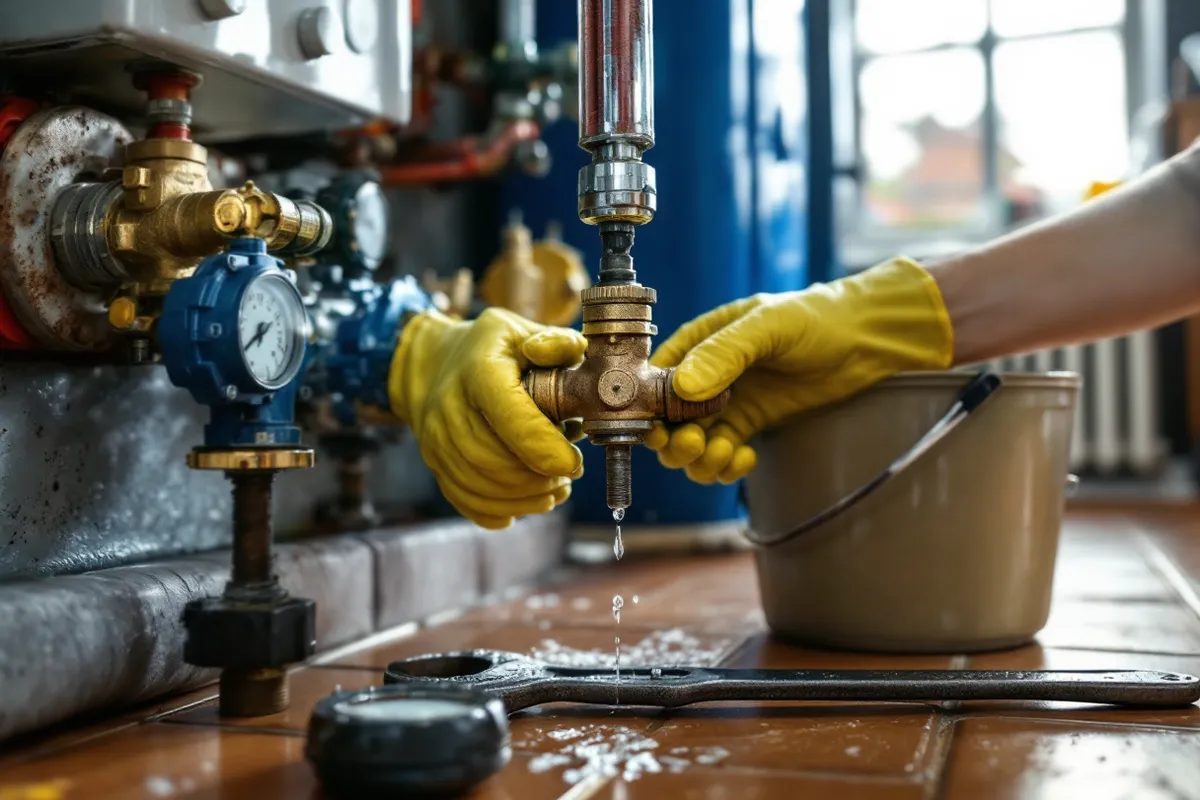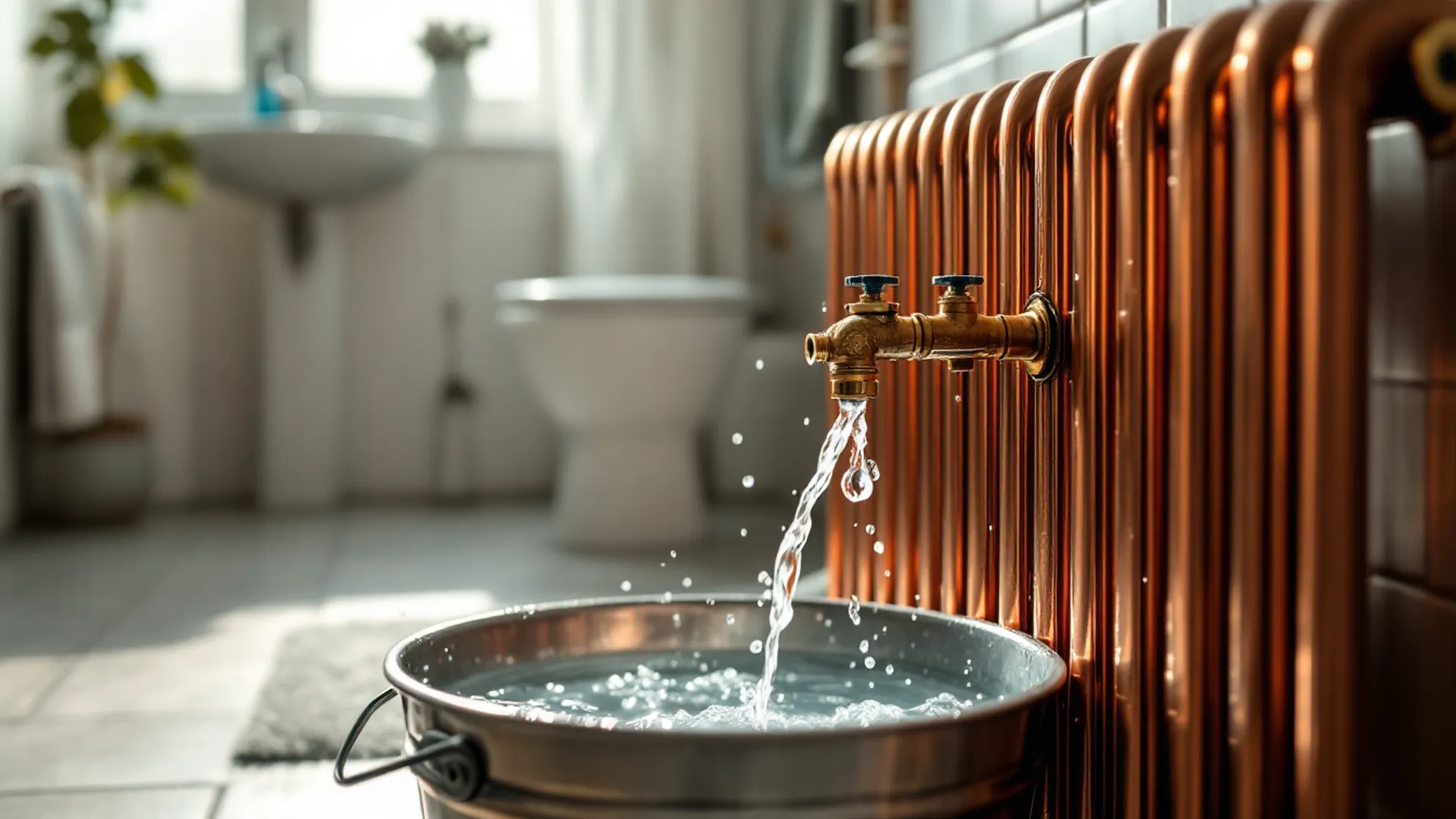
Draining a radiator, draining the whole central heating system, and powerflushing the system are three different jobs. They sound similar, but they solve different problems.
A DIY drain-down can help when you need to remove a radiator for decorating or replace a valve. It will not properly remove years of magnetite sludge from every radiator and pipe circuit. For that, you usually need a professional powerflush.
Draining vs flushing vs powerflushing
Draining a radiator means isolating one radiator and letting the water out. It is useful for decorating, valve replacement or removing one radiator for manual cleaning.
Draining the whole system means emptying the heating circuit through a drain-off point. It is useful before repair work, but it mostly removes water rather than stuck sludge.
Basic flushing means refilling and draining the system to rinse loose debris. It can help after minor work but will not dislodge heavy sludge from radiator bottoms.
Powerflushing uses a separate high-flow machine, cleaning chemical and filtration. It is designed to remove sludge, rust particles and limescale from the full heating circuit.
How to drain a single radiator
Only do this when the heating is off and the radiator is cool.
- Turn off the heating and let the system cool fully.
- Close the thermostatic radiator valve and the lockshield valve.
- Put towels and a shallow tray under one valve connection.
- Open the bleed valve at the top of the radiator to release pressure.
- Loosen the union nut slowly and catch water in the tray.
- Keep emptying the tray until the radiator is drained.
- Tighten the connection before moving or refilling the radiator.
- Reopen valves, bleed the radiator and check boiler pressure after refilling.
This is not the same as flushing the whole system. It only deals with the water inside that radiator.
How to drain the whole heating system
A full drain-down is more involved and can cause leaks if old valves or fittings are disturbed.
- Turn off the boiler and programmer.
- Let the water cool.
- Find the lowest drain-off point on the heating circuit.
- Attach a hose and run it to a suitable outside drain.
- Open the drain-off valve slowly.
- Open radiator bleed valves upstairs to let air in and help the system empty.
- Close all bleed valves and the drain-off valve before refilling.
- Refill the system, bleed radiators, check pressure and inspect every joint.
On sealed systems, you will need to repressurise via the filling loop. On older open-vented systems, the feed-and-expansion tank refills the circuit. If you are unsure which system you have, do not drain it without advice.
What DIY flushing can achieve
A basic DIY rinse can remove loose dirty water after a repair. It may help if the system is fairly clean and you only need to refresh inhibitor.
It will not reliably clear:
- Radiators cold at the bottom
- Thick black sludge settled in radiator panels
- Blocked microbore pipework
- Boiler heat-exchanger scale
- Long-term corrosion debris throughout the system
If those symptoms are present, read what a powerflush is before spending time on repeated drain-downs.
When you need a professional powerflush
Book a powerflush assessment when several symptoms appear together:
- More than one radiator is cold at the bottom
- Water from bleed valves is black or gritty
- The boiler is noisy, rumbling or kettling
- The system heats slowly even after bleeding
- Pump or valve faults keep recurring
- A boiler installer has asked for system-cleaning evidence
A professional engineer uses a high-flow machine, cleaning chemicals, magnetic filtration and inhibitor dosing. That equipment removes material a gravity drain will leave behind.
Safety limits for DIY work
Do not attempt DIY draining or flushing if:
- The boiler has an active fault code
- The system pressure keeps dropping
- Any radiator or valve is visibly corroded
- You suspect a leak under the floor
- The system includes older underfloor heating pipework
- You are unsure how to refill or repressurise the boiler
Never open gas boiler casing or work on gas components. Gas work must be carried out by a Gas Safe registered engineer.
After draining or flushing
After any drain-down:
- Refill slowly
- Bleed radiators from lower floors upward
- Check boiler pressure when cold
- Inspect every valve and union for leaks
- Add corrosion inhibitor if a meaningful amount of water was removed
- Check the system again after the first full heat cycle
If the heating is still slow, radiators remain cold at the bottom, or dirty water returns quickly, the system likely needs a full central heating powerflush. Use our powerflush cost guide to compare quotes before booking.