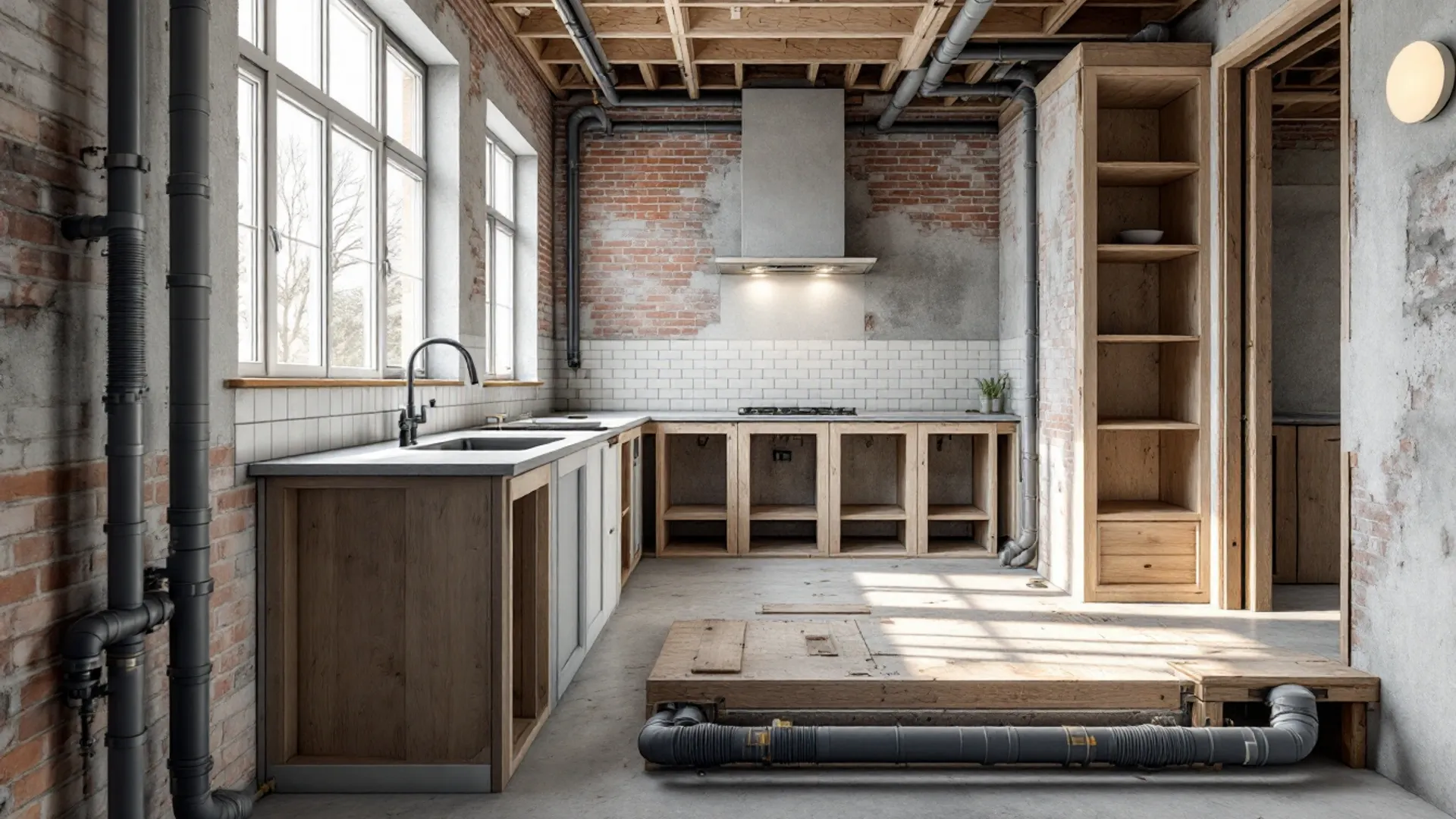
A kitchen extension moves one of the most plumbing-intensive rooms in the house to a new location or expands it substantially. Done well, it’s a transformation. Done badly, it creates drainage problems, building control issues, and expensive remediation. This guide covers the drainage and plumbing essentials before a spade goes in the ground.
What moves and what stays
However, when a kitchen extension is planned, the plumbing implication depends on whether the kitchen is being:
Extended in the same location (rear extension): Additionally, the existing waste connections are typically extended. The kitchen sink waste run gets longer; the drainage connection to the inspection chamber may need extending.
Relocated to the extension (new footprint): Specifically, the kitchen moves from its existing position to the new space. All waste connections, water supply, and gas (if applicable) must be moved to the new location.
Combined with new utility room: For example, a common arrangement — kitchen and utility in the new extension, with washing machine and dishwasher waste in addition to the kitchen sink.
Drainage: the most critical constraint
As a result, kitchen waste contains fat, oil and grease (FOG). The waste pipe from the new kitchen to the nearest inspection chamber must:
Meet the gradient requirements: Meanwhile, 40mm pipe at minimum 1:40 gradient. For a longer pipe run (common in a rear extension), this means the pipe needs to be lower at the drainage end than at the sink end by at least 25mm per metre of run. If the extension floor level is at or below the inspection chamber level, meeting the gradient can be a challenge.
Avoid long horizontal runs. Furthermore, the longer the kitchen waste pipe, the more FOG accumulates in it and the more likely it is to block. Ideally, the kitchen waste connects to the nearest inspection chamber via the shortest route. If a long run is unavoidable, a larger pipe diameter (50mm rather than 40mm) maintains self-cleansing velocity.
Avoid the wrong inspection chamber. In particular, kitchen waste is foul water. The inspection chamber it connects to must be on the foul drain, not the surface water drain. Before making any connection, confirm which sewer the chamber connects to — see our foul vs surface water guide.
Not build over an existing drain. Consequently, if the extension footprint covers an existing drain run, the drain must be rerouted or a build-over agreement arranged. Building over a drain without this creates future maintenance problems (the drain is inaccessible) and will fail building regulations inspection.
Similarly, a CCTV survey of the existing drainage before the extension design is finalised shows exactly where the drain runs are, their depth, and the best connection point.
Water supply
Moreover, the kitchen water supply (cold main and hot supply) must be extended to the new location. For a rear extension:
Cold water: However, the mains cold supply to the existing kitchen can typically be extended, but the pipe must be sized for the distance (a longer run in 15mm pipe may have insufficient pressure at the tap; upgrade to 22mm for runs over 6–8m).
Hot water: Additionally, extended from the existing hot water circuit (combi boiler distribution, system boiler cylinder, or immersion heater). The hot supply run length affects how long you wait for hot water — for longer runs, a secondary pump or a local instantaneous water heater over the sink may be appropriate.
Dishwasher and washing machine: Specifically, each requires a 15mm tee on the cold supply (and hot supply for some machines) and a waste connection. The waste must be connected through an air gap (a standpipe, or the air gap in the washing machine’s overflow hose) to prevent siphoning.
Gas supply for a relocated kitchen
For example, if the kitchen includes a gas hob and the kitchen moves to the new extension, the gas supply must also move. This requires:
- A Gas Safe registered engineer for all gas pipework and connections
- A new or extended gas supply pipe (minimum 22mm for domestic hob connections, 15mm for a single appliance)
- Ventilation requirements met for any gas appliance in an enclosed kitchen
- Building regulations notification of new gas installation
As a result, the gas supply run from the existing gas meter to the new kitchen location may also require upsizing if the run length increases significantly.
Ensuring the underfloor drainage is accessible
Meanwhile, one of the most common mistakes in kitchen extensions is laying a concrete slab over drainage without proper access. If the kitchen waste pipe, the inspection chambers, or a section of the main drain runs under the new extension floor, these must be accessible.
For waste pipes: Furthermore, access traps should be installed in the floor at the base of vertical drops and at any change of direction in the horizontal run.
For inspection chambers: In particular, any chamber that falls within the extension footprint must be rebuilt as a special access chamber with a cover that’s accessible from within the building (removable tile cover or access hatch in the floor finish).
Consequently, a plumber who lays an access trap below the floor finish and tiles over it without creating a removable access panel is leaving an inaccessible time bomb. Insist on a properly designed access arrangement before tiling.
Building regulations
Similarly, kitchen extension drainage is subject to Building Regulations Part H. The drainage plans should be shown on the extension design drawings submitted to building control. A building control officer will inspect:
- The waste pipe gradient and connection to the drain
- That the connection is made to the correct drain (foul, not surface water)
- That drains are not built over without proper access
- That any new inspection chambers are correctly constructed
- That the drainage is tested before the floor is covered
Moreover, don’t cover any drainage until the building control inspection has been passed. An uncovered inspection is far simpler than cutting into a finished floor.