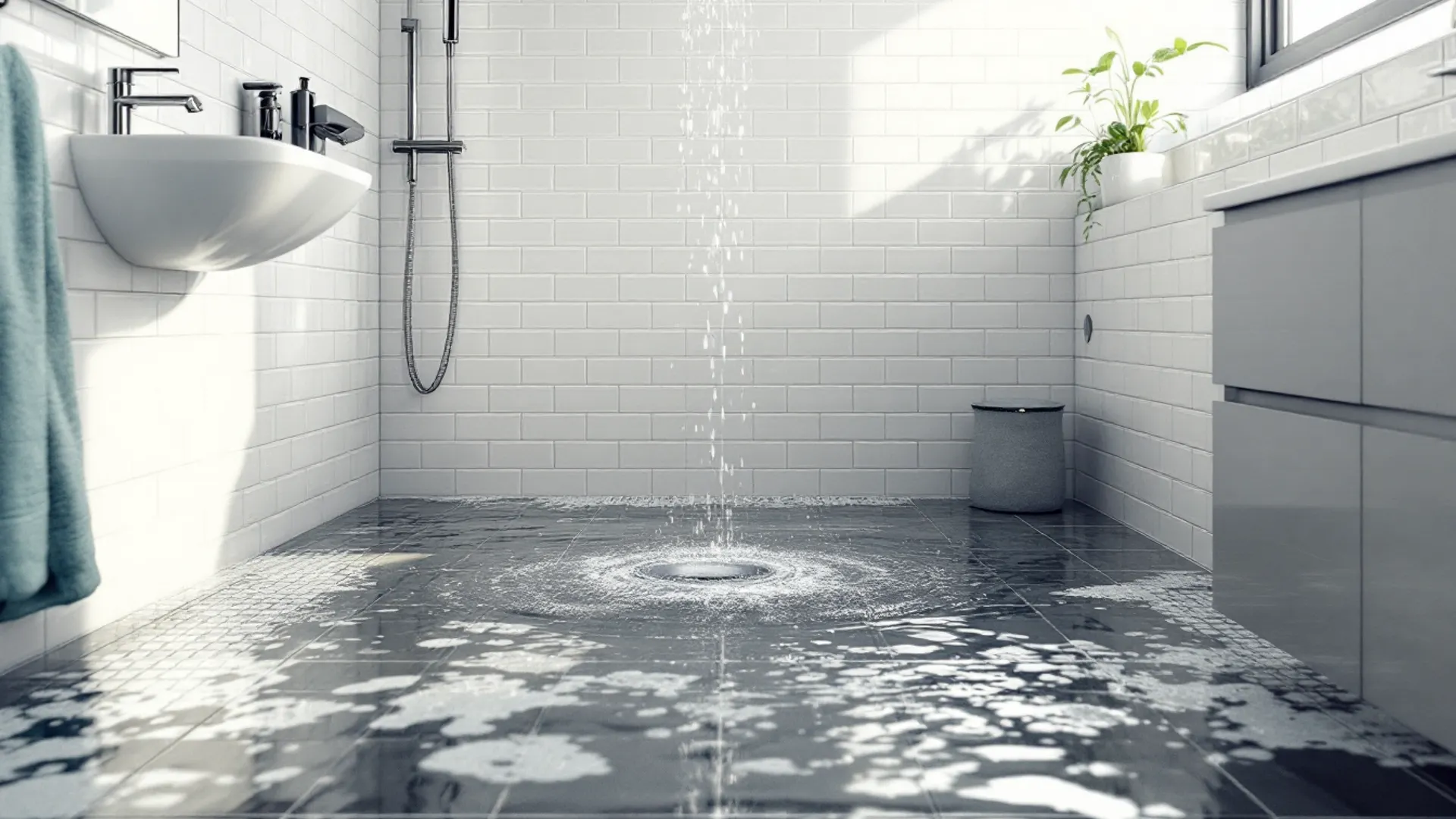
A shower that doesn’t drain is usually one of the most fixable drainage problems in a property. But occasionally it’s a symptom of a more serious issue. Here’s how to work through the likely causes from simplest to most complex.
How to tell what type of blockage you have
Water pools in the shower tray and drains slowly: However, classic hair and soap scum blockage in the trap or waste pipe. The most common cause. DIY clearance is usually effective.
Water drains very slowly even with the cover removed: Additionally, the waste trap itself may be completely packed with debris. The blockage may have extended past the trap into the waste pipe.
Water comes up from the drain when you use another fixture (the toilet, or the bath in another room): Specifically, the blockage is not in your shower drain — it’s in the shared underground drain. Multiple fixtures backing up when one is in use is always a shared drain fault.
Water drains from the shower but sewage smell accompanies it: For example, the trap is dry (water trap evaporated) or the trap itself has a crack. See our sewer smell guide.
Cause 1: Hair and soap in the trap (most common)
As a result, this is the cause in the overwhelming majority of cases. Hair accumulates on the waste grate and trap walls; soap scum binds it; the composite plug restricts and eventually blocks flow.
How to clear it:
-
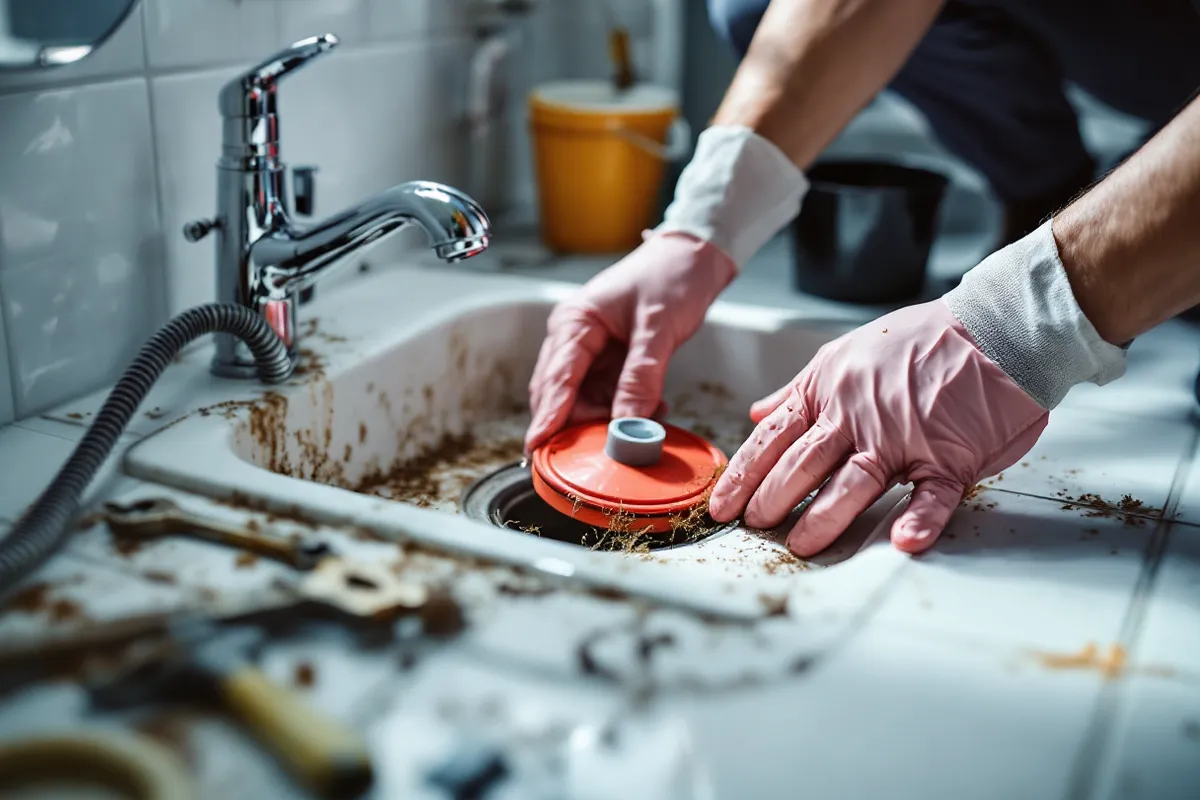
Remove the drain cover. Most shower drain covers either lift straight off, have a centre screw, or clip into a retaining ring. Remove and clean any visible debris from the cover itself.
-
Look into the drain. Can you see the top of the hair plug? If so, reach in with gloves or use a drain hair removal tool (a flexible plastic tool with barbs, inexpensive from any hardware store).
-
Insert the hair removal tool. Push it 10–15cm into the drain, rotate it clockwise, and pull firmly but slowly. You’ll typically retrieve a plug of hair and soap scum that’s surprisingly large given the narrow opening.
-
Repeat until nothing more comes out. Two or three passes is usually sufficient.
-
Flush with hot water. Run the shower at full flow — it should drain immediately. If it’s still slow, there’s more debris further in the waste pipe.
Cause 2: Blocked waste trap under the shower tray
Meanwhile, the waste trap is the U-bend under the shower tray. For walk-in showers on a raised tray or on legs, the trap is usually accessible by removing the panel. For wet rooms with a tiled floor, the trap may be accessible from below (if there’s a floor void) or not accessible without tile removal.
Accessible trap: Furthermore, 1. Remove the panel or access hatch 2. The trap will have a push-fit body — twist and pull the base of the trap to remove it 3. Clean the trap body thoroughly, removing accumulated hair and soap scum 4. Refit (ensure the rubber seal is seated correctly)
Inaccessible trap (wet room, screeded floor): In particular, try the hair removal tool and flushing methods first. If the trap is completely blocked and can’t be cleared from above, you may need a plumber to create access — either from an adjacent void, by removing a tile, or by cutting a small access panel.
Cause 3: Blockage in the waste pipe run
Consequently, if clearing the trap doesn’t restore full flow, the blockage (or a second blockage) is further along the waste pipe. Between the trap and the external drain connection.
Similarly, most shower waste pipes run 40–50mm and connect to the soil stack or directly to an outside drain. Blockages in this section are usually compacted hair and soap scum that’s been pushed past the trap over months.
Try: Moreover, pour a full kettle of hot water (not boiling if plastic waste pipes — use hot-but-not-boiling) down the drain after clearing the trap. Follow with a biological enzyme treatment and leave overnight.
If this doesn’t work: However, call a plumber. A drain snake (flexible auger) in the waste pipe can reach blockages 2–3 metres from the trap. For blockages further into the system, rodding from the outside access point may be needed.
Cause 4: Shower tray seal and installation issues
Additionally, a shower that drips under the tray rather than going down the drain is a seal problem, not a drain blockage. Signs:
- Water appears on the floor outside the shower enclosure
- Ceiling staining below the shower if it’s on an upper floor
- Water runs correctly from the tray to the drain, but appears elsewhere
Specifically, silicone seals between the shower tray and wall tiles deteriorate with age, allowing water to get behind the tray. This is a bathroom repair job — re-sealing requires removing the old silicone, cleaning the surfaces, and applying new bathroom-grade silicone.
Cause 5: Shared drain fault (multiple fixtures affected)
For example, if your shower drains slowly and so does the bath, or if the toilet gurgles when you shower. The problem is in the main drain, not the shower waste. See our outside drain guide for diagnosing shared drain issues.
Preventing shower drain blockages
Drain cover/hair catcher: As a result, a flat mesh insert over the shower drain catches hair before it enters the drain. Empty it after every shower — takes five seconds. By far the most effective preventive measure.
Weekly hot water flush: Meanwhile, once a week, run the shower on its hottest setting for 2–3 minutes with a blocked plug in place (so the tray fills slightly), then remove the plug. The weight of the water column helps push accumulated soap through the trap.
Monthly enzyme treatment: Furthermore, biological drain cleaner poured down the drain and left overnight. Digests any organic residue before it compacts.