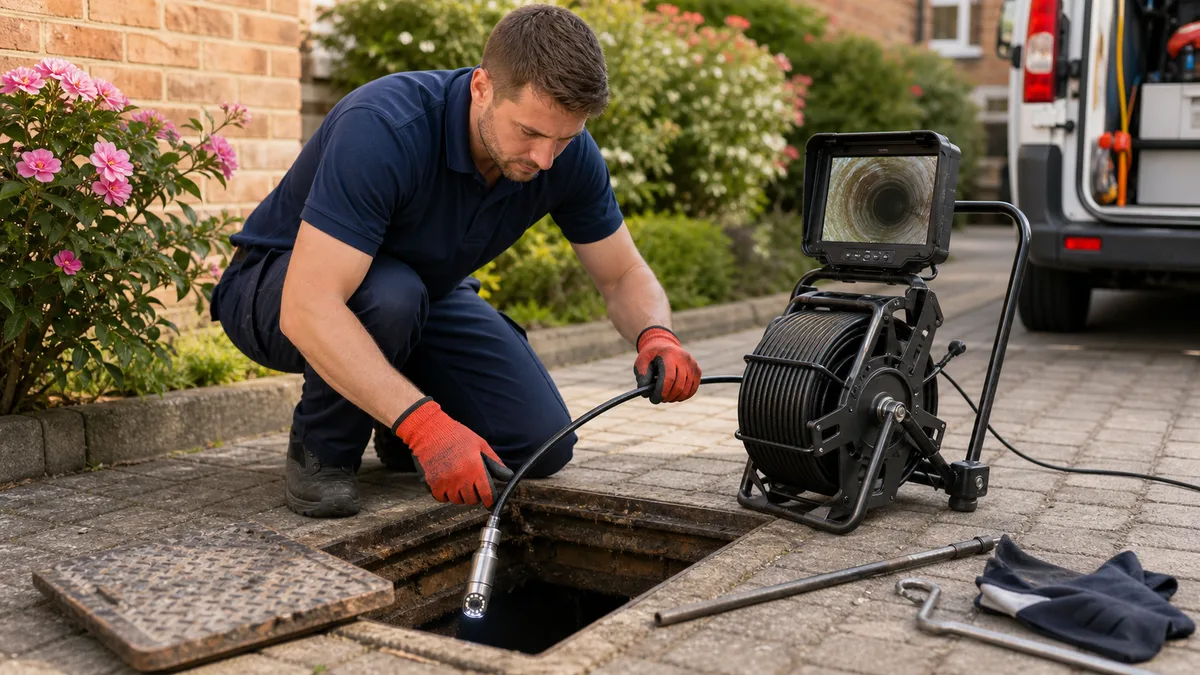
CCTV Survey in Llandrindod Wells
Llandrindod Wells' combined sewerage system (foul and surface water share a single pipe) and aging housing stock—with 24% Victorian properties—make pre-purchase CCTV surveys essential. A video inspection in LD1, LD2, or LD3 frequently reveals root intrusion, joint displacement, or sediment accumulation that would otherwise surface after completion. Combined sewers in older Llandrindod Wells districts are prone to surcharge during rainfall, meaning a seemingly minor defect can trigger repeated internal flooding.
CCTV surveys in Llandrindod Wells are most valuable pre-purchase, especially for Victorian properties (24% of stock). Combined sewerage means any defect—root intrusion, cracking, sediment—triggers surcharge and internal flooding during heavy rain. Welsh Water manages public sewers; property owners maintain private drains. Video evidence guides negotiation and identifies maintenance priorities in LD1–LD4.
Drainage in Llandrindod Wells — what local engineers know
Welsh Water operates Llandrindod Wells' combined drainage network, and Powys Council enforces building standards for repairs and property transactions. The town's soft water supply (typical of mid-Wales) reduces limescale but allows acidic pH to corrode older copper fittings and lead joints—common in Llandrindod Wells' substantial Victorian housing. Combined sewers create secondary risk: surface water surcharge during heavy rain can force sewage back into properties, making pre-purchase video evidence critical for negotiation and future maintenance planning.
- Soft water supply reduces limescale, but slightly acidic pH can accelerate corrosion of copper fittings and lead joints in older Llandrindod Wells properties
- Combined sewerage infrastructure — common in older parts of Llandrindod Wells — means foul and surface water share the same pipe, increasing surcharge risk during heavy rainfall
- Ageing infrastructure in parts of Llandrindod Wells means drain blockages from grease, wipes and root ingress remain the most common call-out reasons
- With 36% of properties built before 1920, salt-glazed clay drainage and lead-solder copper pipework are common — pipe collapse, root ingress and joint failure are recurring call-out drivers.
What happens when you call us in Llandrindod Wells
- 1 Immediate dispatch. We find the nearest available engineer covering LD1/LD2 and confirm the ETA before the call ends.
- 2 On-site diagnosis — no guessing. The engineer inspects using our high-definition camera system and quotes a fixed price before work starts.
- 3 Job complete, report issued. You receive a written completion report. All work is guaranteed — same fault returns within the guarantee period, we come back free.