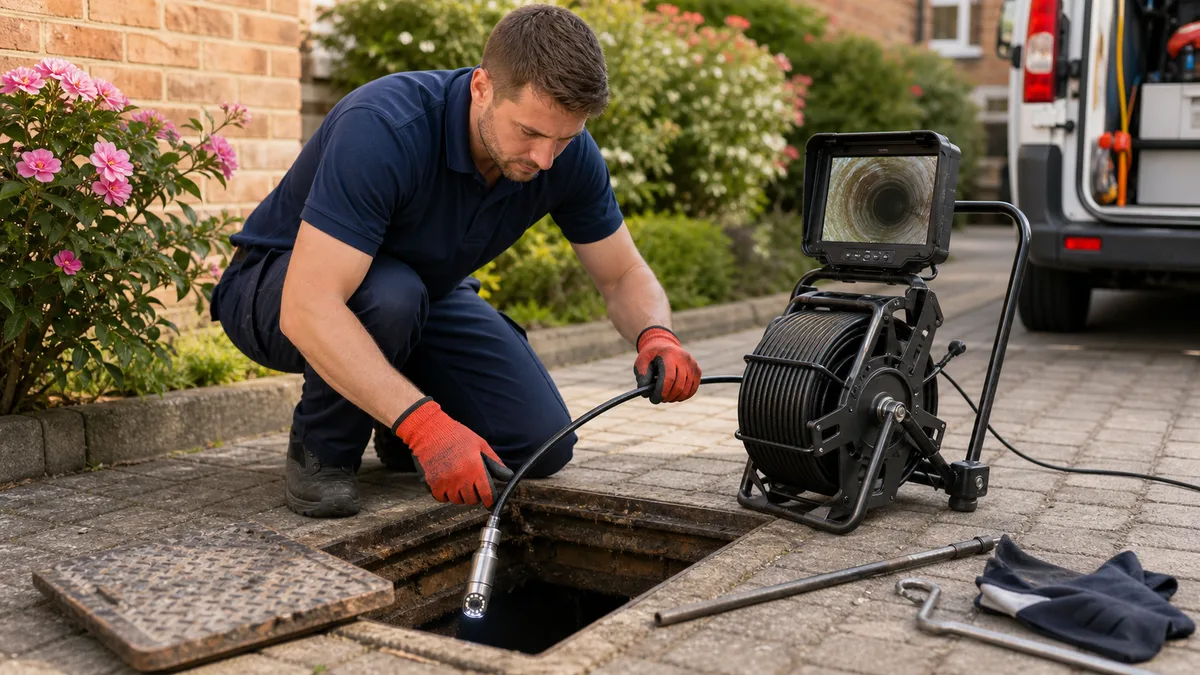
CCTV Survey in St Ann's
St Ann's in Nottingham hosts a significant population of Victorian (20%) and Edwardian (12%) homes across NG3, NG4, NG5 and NG6—a demographic that makes pre-purchase drain surveys essential. The area's separate sewer system creates a different risk profile: misconnections (e.g. washing machines plumbed into surface water drains) are common in older St Ann's properties and can trigger environmental enforcement action by Severn Trent Water and Nottingham City Council. CCTV surveys are the fastest way to verify sewer integrity, identify hidden defects and flag misconnections before they become costly liabilities.
St Ann's CCTV drain surveys detect misconnections (washing machines draining to surface water), root damage in 120+ year-old clay pipes, and joint defects in Victorian homes (NG3–NG6). Pre-purchase surveys prevent regulatory liability and reveal needed repairs before purchase completion.
Drainage in St Ann's — what local engineers know
St Ann's falls within Severn Trent Water's operational boundary and Nottingham City Council's jurisdiction. With a population of 10,000 and high flood risk, the area's hard-water supply (typically 250–350 mg/L CaCO₃) causes rapid limescale buildup in boilers and soil pipes—but the greater concern is the separate sewer network. Unlike combined sewers elsewhere, St Ann's' separate system splits foul (toilet, sink, bath) and surface water (rainfall, roof runoff) into two distinct pipes. Misconnections—where a washing machine or dishwasher drains into the surface water pipe instead of foul—are widespread in older St Ann's properties and breach environmental regulations. Severn Trent Water has issued enforcement notices to residents in NG3 and NG4. Root intrusion and joint displacement are also prevalent in Victorian St Ann's, where clay and terracotta drains are over 130 years old.
- Hard water supply causes limescale accumulation in boilers, radiators and soil pipe joints — powerflush and descaling demand is high across St Ann's
- Separate sewer system across most of St Ann's: misconnections (e.g. washing machines plumbed into surface water drains) are a known local issue and can result in environmental enforcement action
- High flood risk in St Ann's: basement and ground-floor properties near watercourses are vulnerable to sewer backflow — non-return valve installation is strongly recommended
- With 32% of properties built before 1920, salt-glazed clay drainage and lead-solder copper pipework are common — pipe collapse, root ingress and joint failure are recurring call-out drivers.
What happens when you call us in St Ann's
- 1 Immediate dispatch. We find the nearest available engineer covering NG3/NG4 and confirm the ETA before the call ends.
- 2 On-site diagnosis — no guessing. The engineer inspects using our high-definition camera system and quotes a fixed price before work starts.
- 3 Job complete, report issued. You receive a written completion report. All work is guaranteed — same fault returns within the guarantee period, we come back free.