Leak Detection in Eastbourne
Eastbourne's hard water supply from Southern Water accelerates pin-hole corrosion in copper pipework, especially in Victorian and Edwardian properties across BN21 and BN22. These tiny perforations are difficult to spot until water damage becomes visible in walls or ceilings. The separate sewer system serving most of Eastbourne means misplaced drainage pipes can mask water leaks for weeks.
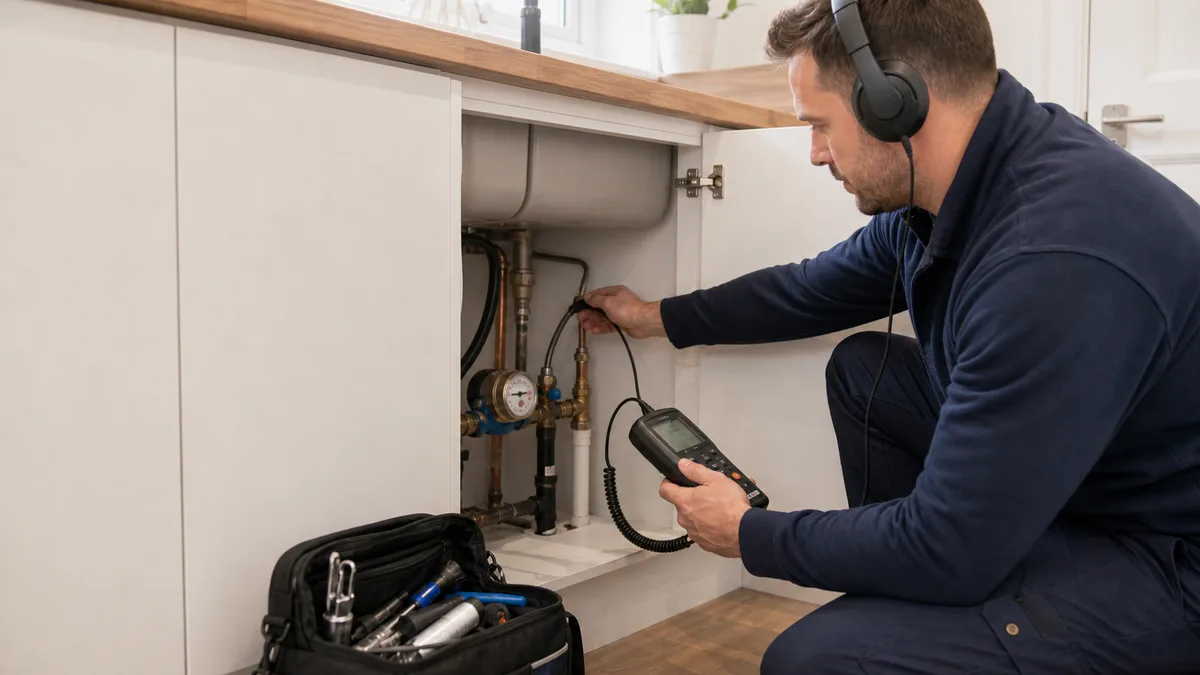
Leak detection in Eastbourne identifies hidden water damage caused by pin-hole corrosion in copper pipes, a result of Southern Water's hard-water supply. Our acoustic and pressure-based methods locate leaks in both supply pipes and drainage, critical for properties on Eastbourne's separate sewer system where leaks don't always trigger obvious signs.
Drainage in Eastbourne — what local engineers know
Southern Water supplies hard water across Eastbourne, with mineral content that degrades copper pipes faster than softer-water regions. Eastbourne Council's flood risk policies mean properties across the BN postcodes face higher drainage scrutiny. The town's separate sewer network—where surface and foul water run in different pipes—creates an additional detection challenge: a leak in your supply pipe may not trigger the obvious signs you'd see with combined sewers. Victorian terracing (22% of Eastbourne's housing) compounds the issue: copper pipework from the 1890s-1910s often corroded from inside out.
- Hard water supply causes limescale accumulation in boilers, radiators and soil pipe joints — powerflush and descaling demand is high across Eastbourne
- Separate sewer system across most of Eastbourne: misconnections (e.g. washing machines plumbed into surface water drains) are a known local issue and can result in environmental enforcement action
- High flood risk in Eastbourne: basement and ground-floor properties near watercourses are vulnerable to sewer backflow — non-return valve installation is strongly recommended
- Coastal salt-laden air in Eastbourne accelerates corrosion of external soil stacks, pipe brackets and galvanised fittings on exposed elevations
- With 36% of properties built before 1920, salt-glazed clay drainage and lead-solder copper pipework are common — pipe collapse, root ingress and joint failure are recurring call-out drivers.
What happens when you call us in Eastbourne
- 1 Immediate dispatch. We find the nearest available engineer covering BN21/BN22 and confirm the ETA before the call ends.
- 2 On-site diagnosis — no guessing. The engineer inspects using professional-grade equipment including CCTV where needed and quotes a fixed price before work starts.
- 3 Job complete, report issued. You receive a written completion report. All work is guaranteed — same fault returns within the guarantee period, we come back free.