Drains Cleared
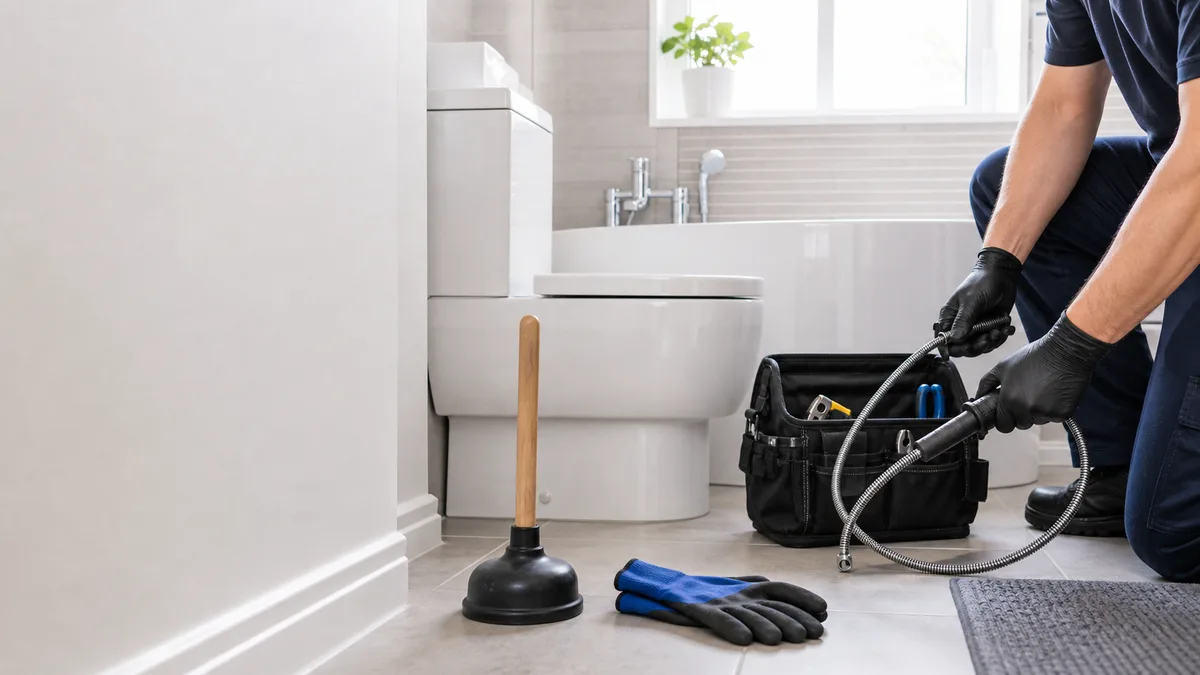
Clean bathroom drainage tools prepared for a blocked toilet callout

Toilet Repairs & Installation in Cannock

We clear 90% of blocked toilets without lifting the pan — saving the sealant, tile damage and extra labour most plumbers charge for. Serving WS11, WS12, WS13, WS14.
WS11WS12WS13WS14
0333 772 0123
We route to vetted local engineers covering WS11, WS12, WS13 and WS14 with a 60-minute response target for drain emergencies across Cannock and the surrounding area.

Blocked Toilets in Cannock

Cannock has a split sewer system across most postcodes (WS11, WS12, WS13, WS14), which puts specific demands on toilet installation and repair. With 32% of properties built before 1920—many with cast-iron soil pipes or salt-glazed clay drainage—you'll often find older cistern setups that fail differently than modern close-coupled units. We handle everything from high-level cistern replacements in Victorian terraces to macerator repairs in modern flats.

Toilet repairs in Cannock include cistern replacements, macerator servicing, and blockage clearance. Victorian terraces need high-level-to-modern conversions; modern flats need macerator cartridge replacement or concealed-cistern servicing. All work accounts for hard-water zones and High flood-risk areas along the River Trent.

Drainage in Cannock — what local engineers know

Severn Trent Water supplies all of Cannock Chase, and the hard-water zones mean limescale buildup is a routine issue affecting cistern fills and soil-pipe joints. Separate sewer misconnections are particularly common here—washing machines accidentally plumbed into surface-water drains—and can lead to environmental enforcement action from Cannock Chase Council if left unaddressed. With High flood-risk designation along the River Trent and River Soar, ground-floor and basement properties are vulnerable to sewer backflow; a properly installed non-return valve on your toilet outlet is essential, not optional.

  • Hard water supply causes limescale accumulation in boilers, radiators and soil pipe joints — powerflush and descaling demand is high across Cannock
  • Separate sewer system across most of Cannock: misconnections (e.g. washing machines plumbed into surface water drains) are a known local issue and can result in environmental enforcement action
  • High flood risk in Cannock: basement and ground-floor properties near watercourses are vulnerable to sewer backflow — non-return valve installation is strongly recommended
  • With 32% of properties built before 1920, salt-glazed clay drainage and lead-solder copper pipework are common — pipe collapse, root ingress and joint failure are recurring call-out drivers.

What happens when you call us in Cannock

  1. 1 Immediate dispatch. We find the nearest available engineer covering WS11/WS12 and confirm the ETA before the call ends.
  2. 2 On-site diagnosis — no guessing. The engineer inspects using professional-grade equipment including CCTV where needed and quotes a fixed price before work starts.
  3. 3 Job complete, report issued. You receive a written completion report. All work is guaranteed — same fault returns within the guarantee period, we come back free.

About drainage in Cannock

Local facts our engineers use when they arrive.

Population
10,000
Postcode districts
WS11WS12WS13WS14
Council
Cannock Chase
Water authority
Severn Trent Water
Flood risk
High — affected watercourses: River Trent, River Soar, River Welland
Property mix
Victorian 20%
Edwardian 12%
Interwar 22%
Postwar 28%
Modern 18%
Sewer type separate
Common local issues
Hard water supply causes limescale accumulation in boilers, radiators and soil pipe joints — powerflush and descaling demand is high across CannockSeparate sewer system across most of Cannock: misconnections (e.g. washing machines plumbed into surface water drains) are a known local issue and can result in environmental enforcement actionHigh flood risk in Cannock: basement and ground-floor properties near watercourses are vulnerable to sewer backflow — non-return valve installation is strongly recommendedWith 32% of properties built before 1920, salt-glazed clay drainage and lead-solder copper pipework are common — pipe collapse, root ingress and joint failure are recurring call-out drivers.

This information helps our engineers arrive prepared.

Illustrative example of typical work

Cast-iron soil pipe failure in a WS12 Victorian terrace

Area:
Cannock
Service:
Blocked Toilets

A 1890s terrace in WS12 developed a weeping toilet pan where the cast-iron pipe had corroded from inside, causing slow seepage into the brick. The occupant thought it was a simple flush mechanism—it wasn't. We replaced the entire soil-pipe section with modern PVC, upgraded the cistern to a modern close-coupled unit, and the issue resolved completely.

This describes typical work performed by engineers in our network. Names and specific details have been omitted to protect customer privacy.

Blocked Toilets in Cannock — FAQs

Why does my toilet cistern keep furring up with limescale in Cannock?
Severn Trent Water supplies hard water across Cannock, which deposits mineral scale in cisterns, float valves, and fill mechanisms. You'll notice white buildup inside the cistern bowl or a sluggish fill rate. Periodic descaling or a cistern replacement with a cartridge-fill mechanism (less prone to scale) usually fixes it.
I rent a flat in WS13 with a macerator toilet. What maintenance does it need?
Macerators grind waste and pump it uphill—common in modern flats where soil pipes run in tight spaces. They need annual servicing to check the impeller and seals; flushing anything but toilet paper and human waste will jam it. If yours is over 10 years old, cartridge replacement is often cheaper than a repair.
My toilet pan rocks slightly on the floor. Is this a safety risk?
A loose pan usually means failed wax or silicone seals where it meets the soil pipe, or deteriorated grout around the floor flange. Left alone, water seeps into the subfloor and rots timber joists. A simple reset with new wax seal (for Victorian or Edwardian houses) or re-grouting (modern properties) stops the rock.
Are non-return valves really necessary on toilets in Cannock?
Yes. Cannock sits in a High flood-risk zone near the Trent and Soar rivers. Sewer backflow during heavy rain can flood your toilet bowl or even your bathroom through the pan outlet. A one-way valve installed on the outlet pipe is cheap insurance in this area.
Why does my toilet keep blocking?
The three most common causes are non-flushable wipes, excessive paper use, and partial blockages downstream in the soil pipe that need jetting rather than plunging.
Can you fix a Saniflo or macerator?
Yes. We service and repair all major macerator brands including Saniflo, Sanivite and Grundfos, and carry common replacement parts on the van.
Will I have to remove the toilet?
Almost never. We use closet augers and micro-jetting heads that clear the vast majority of blockages through the pan itself.
Is a blocked toilet dangerous?
It can be. Overflowing waste water carries bacterial contaminants, so a prolonged blockage should always be treated as urgent, especially in commercial premises.

Blocked Toilets near Cannock

We cover towns within and around Cannock. Click a town to see local engineer availability.

Ready to book in Cannock?

We route to vetted local engineers covering WS11, WS12, WS13 and WS14 with a 60-minute response target for drain emergencies across Cannock and the surrounding area.

0333 772 0123