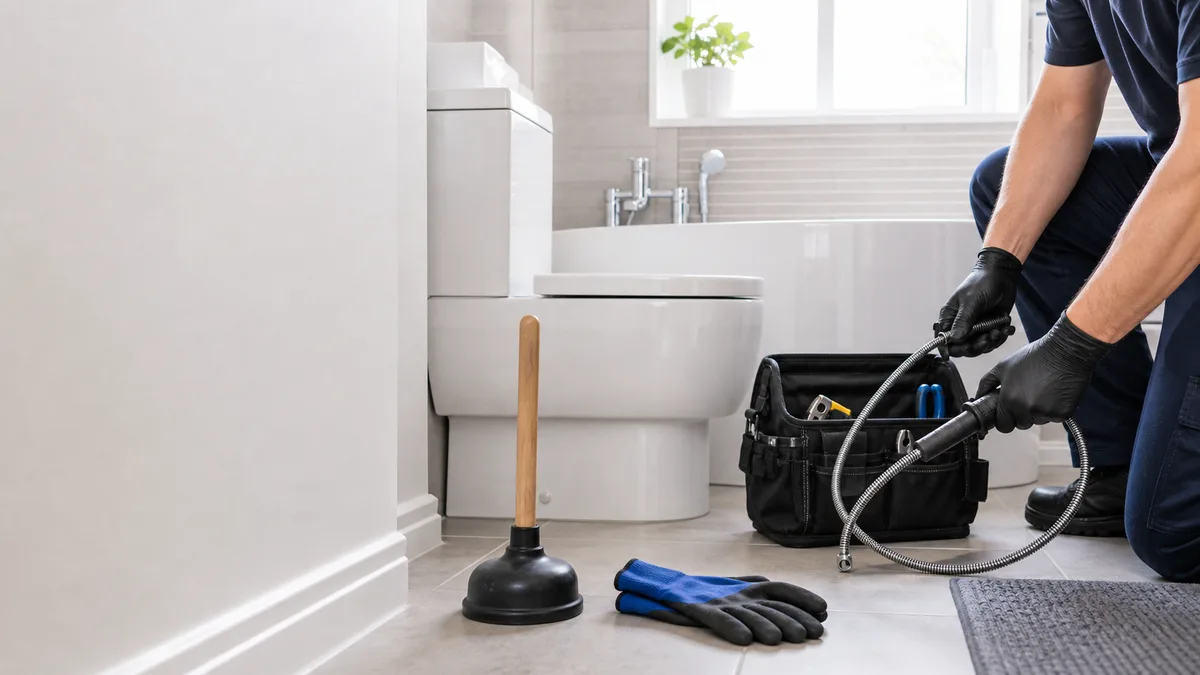
Blocked Toilets in Cardiff
Cardiff's combined sewerage system routes foul and surface water through the same pipes, increasing blockage risk during downpours. With 36% of homes built before 1920, cast-iron soil pipe connections and Victorian cistern designs remain common across CF10, CF11, CF12 and CF13. Toilet repairs range from replacing high-level cisterns in Edwardian terraces to fixing macerator cartridges in modern flats — local water quality and ageing cast-iron connections both drive these jobs.
Toilet repairs in Cardiff (CF10-CF13) cover running cisterns, weeping pans, macerator faults and cast-iron soil pipe failures. Victorian and Edwardian homes need high-level or low-level cistern replacement; modern flats need macerator cartridge servicing. Welsh Water soft water and combined sewers drive frequent repairs. 60-minute emergency response available.
Drainage in Cardiff — what local engineers know
Welsh Water supplies Cardiff with soft water across CF10-CF13, which reduces limescale but the slightly acidic pH corrodes copper fittings and lead joints — a key issue in older properties. Cardiff Council's combined sewerage system means grease, wipes and root ingress frequently block shared foul and surface-water pipes, with water backing up into properties during heavy rain. 36% of Cardiff's pre-1920 stock has salt-glazed clay drains and cast-iron soil pipes prone to collapse from root ingress — these failures drive most toilet and drain repair calls. Victorian terraces in CF11 and CF12 are particularly affected. Cistern repairs usually tie back to these ageing materials.
- Soft water supply reduces limescale, but slightly acidic pH can accelerate corrosion of copper fittings and lead joints in older Cardiff properties
- Combined sewerage infrastructure — common in older parts of Cardiff — means foul and surface water share the same pipe, increasing surcharge risk during heavy rainfall
- Ageing infrastructure in parts of Cardiff means drain blockages from grease, wipes and root ingress remain the most common call-out reasons
- With 36% of properties built before 1920, salt-glazed clay drainage and lead-solder copper pipework are common — pipe collapse, root ingress and joint failure are recurring call-out drivers.
What happens when you call us in Cardiff
- 1 Immediate dispatch. We find the nearest available engineer covering CF10/CF11 and confirm the ETA before the call ends.
- 2 On-site diagnosis — no guessing. The engineer inspects using professional-grade equipment including CCTV where needed and quotes a fixed price before work starts.
- 3 Job complete, report issued. You receive a written completion report. All work is guaranteed — same fault returns within the guarantee period, we come back free.