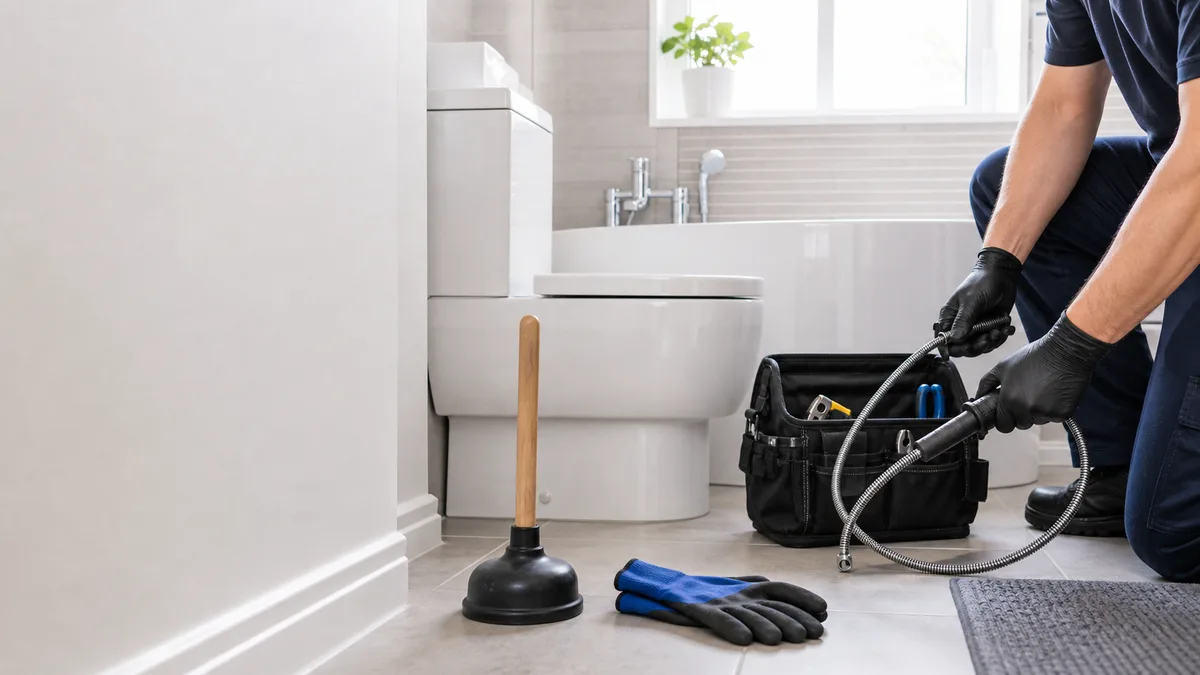
Blocked Toilets in Islington
Islington's housing stock spans Victorian terraces with original high-level cisterns, Edwardian properties with low-level suites, and modern builds with dual-flush systems. Each era presents different challenges: Victorian N1 and N2 properties often require specialized siphon repairs or porcelain replacement, while modern N3 and N4 homes benefit from water-efficient upgrades. Thames Water and Islington Council encourage efficient installations to reduce water consumption across the borough.
Toilet repairs and installation in Islington address the needs of diverse housing ages. Victorian properties (N1–N2) require specialist siphon repair or period-correct replacement; Edwardian homes (N2–N3) often need fill-valve updates; modern properties (N3–N4) benefit from dual-flush upgrades meeting Thames Water efficiency standards and Islington Council regulations.
Drainage in Islington — what local engineers know
Islington's diverse housing stock—18% Victorian, 10% Edwardian, 26% modern—means toilet failures vary significantly by property age. Victorian terraces (common in N1–N2) feature original high-level cisterns with china bowls and mechanical siphons; these require specialist knowledge to repair or replace period-correctly. Edwardian properties (N2–N3) often have low-level pan suites with early flush mechanisms. Modern Islington developments (N3–N4) use dual-flush cisterns regulated by Islington Council building standards. All installations must meet Thames Water connection requirements.
- Hard water supply causes limescale accumulation in boilers, radiators and soil pipe joints — powerflush and descaling demand is high across Islington
- Separate sewer system across most of Islington: misconnections (e.g. washing machines plumbed into surface water drains) are a known local issue and can result in environmental enforcement action
- Ageing infrastructure in parts of Islington means drain blockages from grease, wipes and root ingress remain the most common call-out reasons
- With 28% of properties built before 1920, salt-glazed clay drainage and lead-solder copper pipework are common — pipe collapse, root ingress and joint failure are recurring call-out drivers.
What happens when you call us in Islington
- 1 Immediate dispatch. We find the nearest available engineer covering N1/N2 and confirm the ETA before the call ends.
- 2 On-site diagnosis — no guessing. The engineer inspects using professional-grade equipment including CCTV where needed and quotes a fixed price before work starts.
- 3 Job complete, report issued. You receive a written completion report. All work is guaranteed — same fault returns within the guarantee period, we come back free.