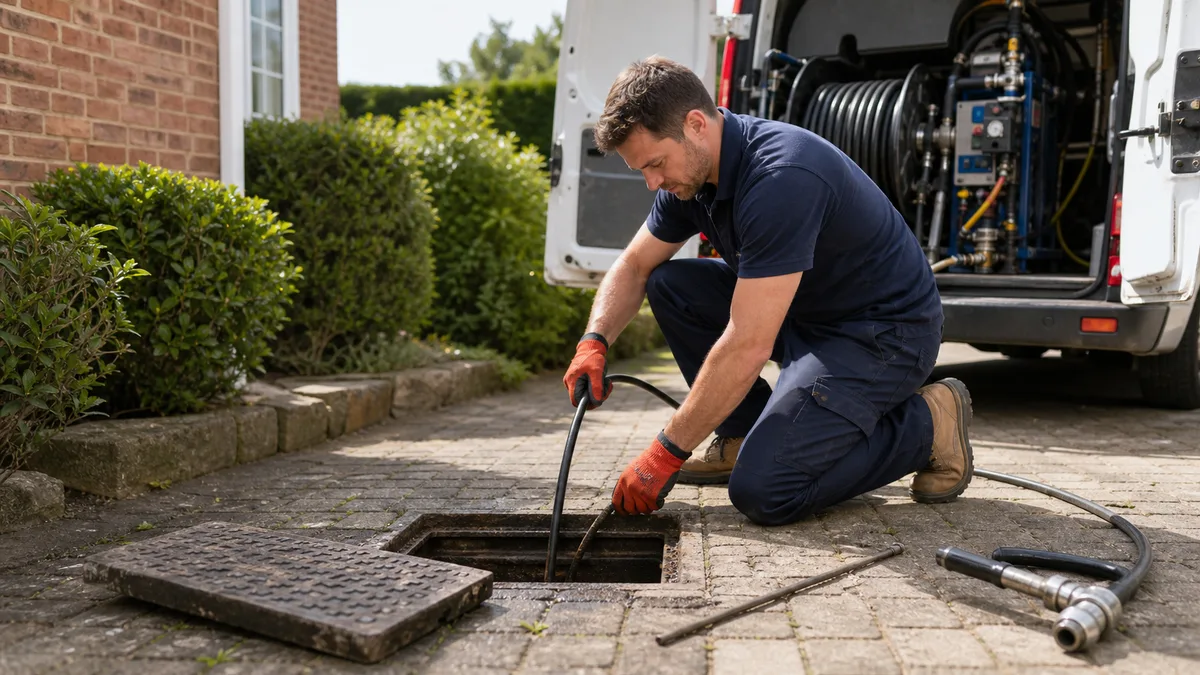
Blocked Drains in Islington
Islington's separate sewer system—which routes surface water and foul sewage through distinct underground networks—creates unique blockage challenges absent in combined sewer areas. Misconnections (washing machines, guttering, or garage drains plumbed into surface water lines) are endemic across N1, N2, N3 and N4, causing backups and environmental enforcement from Islington Council. Victorian and Edwardian properties are particularly vulnerable; their original drainage was often modified without updating connection routing.
Blocked drain clearance in Islington requires understanding the separate sewer system: foul sewage and surface water use distinct pipes. Misconnections—where washing machines, guttering, or garages drain into the wrong system—are common in Victorian and Edwardian properties and trigger environmental enforcement. CCTV surveys identify misconnections; rerouting pipes to the correct sewer resolves blockages and council compliance issues.
Drainage in Islington — what local engineers know
Islington Council operates a separate sewer network where surface water (rain, gutter runoff) and foul sewage travel via distinct underground pipes. This design prevents flooding during heavy rain but creates enforcement risk: any non-sewage discharge into foul drains (or vice versa) can trigger environmental action from Islington or Thames Water. The 28% of Islington housing built before 1920 often has original drainage connections; later alterations (extensions, new kitchens) frequently plumb appliances into the wrong system. Modern developments (26% of Islington) must meet strict building regulations, but older properties require professional verification and remediation.
- Hard water supply causes limescale accumulation in boilers, radiators and soil pipe joints — powerflush and descaling demand is high across Islington
- Separate sewer system across most of Islington: misconnections (e.g. washing machines plumbed into surface water drains) are a known local issue and can result in environmental enforcement action
- Ageing infrastructure in parts of Islington means drain blockages from grease, wipes and root ingress remain the most common call-out reasons
- With 28% of properties built before 1920, salt-glazed clay drainage and lead-solder copper pipework are common — pipe collapse, root ingress and joint failure are recurring call-out drivers.
What happens when you call us in Islington
- 1 Immediate dispatch. We find the nearest available engineer covering N1/N2 and confirm the ETA before the call ends.
- 2 On-site diagnosis — no guessing. The engineer inspects using professional-grade equipment including CCTV where needed and quotes a fixed price before work starts.
- 3 Job complete, report issued. You receive a written completion report. All work is guaranteed — same fault returns within the guarantee period, we come back free.