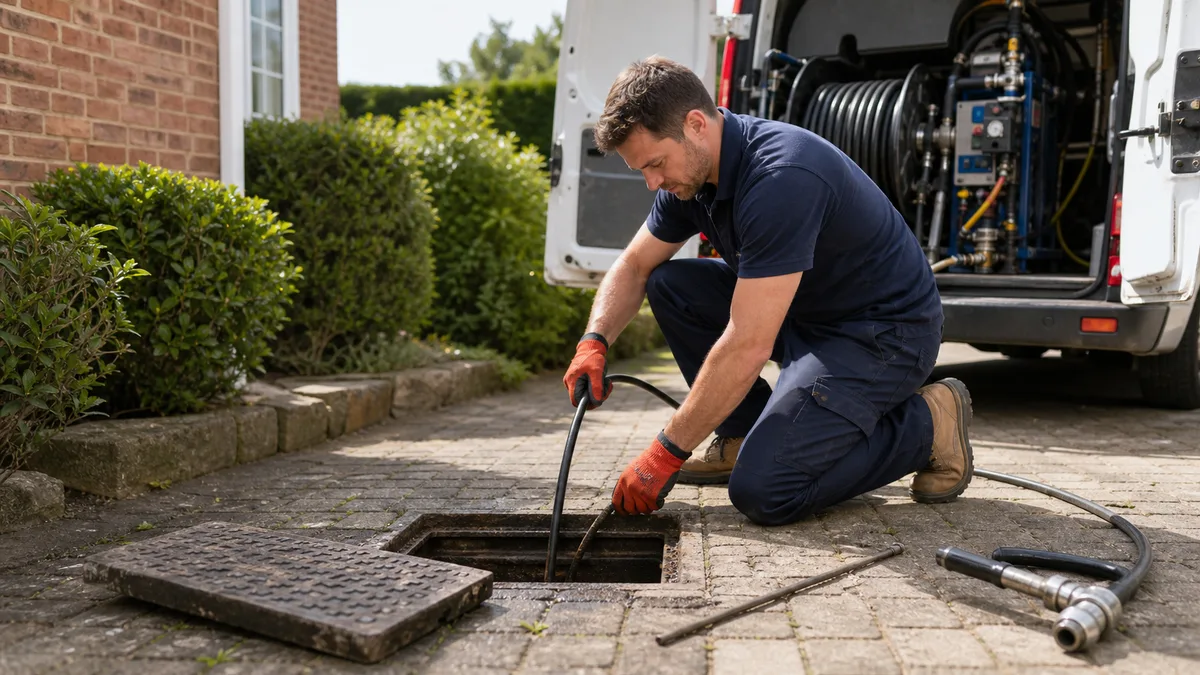
Blocked Drains in Havant
Havant's separate sewer system (distinct from combined sewers in nearby towns) means blocked drains stem from two sources: Victorian/Edwardian misconnections (e.g., washing-machine waste to surface drains) and tree-root intrusion in clay soils. A blocked drain in PO10-PO12 isn't just inconvenient—it's an environmental risk. Havant Borough Council enforces drainage compliance; Southern Water and the Environment Agency penalize incorrect discharge routes. Fast clearance prevents property damage and regulatory action.
Blocked drains in Havant result from the separate sewer system and tree roots in clay soil. Misconnections (washing machines on surface drains) are illegal and trigger Environment Agency enforcement. Victorian Havant housing has chronic misconnection risk. CCTV surveys confirm sewer routes; root removal and relining prevent blockages.
Drainage in Havant — what local engineers know
Havant's separate sewer system splits foul (toilet/kitchen waste) and surface (rainwater/garden runoff) flows into different pipes. Property misconnections are rife, particularly in Victorian terraces (PO10-PO11) where DIY drainage work predates modern standards. Clay soil (dominant in Havant) encourages tree roots to seek moisture—roots penetrate clay pipes within 15–20 years. Environment Agency enforcement notices for misconnected drains are increasingly common in Havant. Havant Borough Council requires CCTV surveys before any major drain repair to confirm sewer type.
- Hard water supply causes limescale accumulation in boilers, radiators and soil pipe joints — powerflush and descaling demand is high across Havant
- Separate sewer system across most of Havant: misconnections (e.g. washing machines plumbed into surface water drains) are a known local issue and can result in environmental enforcement action
- High flood risk in Havant: basement and ground-floor properties near watercourses are vulnerable to sewer backflow — non-return valve installation is strongly recommended
- Coastal salt-laden air in Havant accelerates corrosion of external soil stacks, pipe brackets and galvanised fittings on exposed elevations
- With 26% of properties built before 1920, salt-glazed clay drainage and lead-solder copper pipework are common — pipe collapse, root ingress and joint failure are recurring call-out drivers.
What happens when you call us in Havant
- 1 Immediate dispatch. We find the nearest available engineer covering PO9/PO10 and confirm the ETA before the call ends.
- 2 On-site diagnosis — no guessing. The engineer inspects using professional-grade equipment including CCTV where needed and quotes a fixed price before work starts.
- 3 Job complete, report issued. You receive a written completion report. All work is guaranteed — same fault returns within the guarantee period, we come back free.