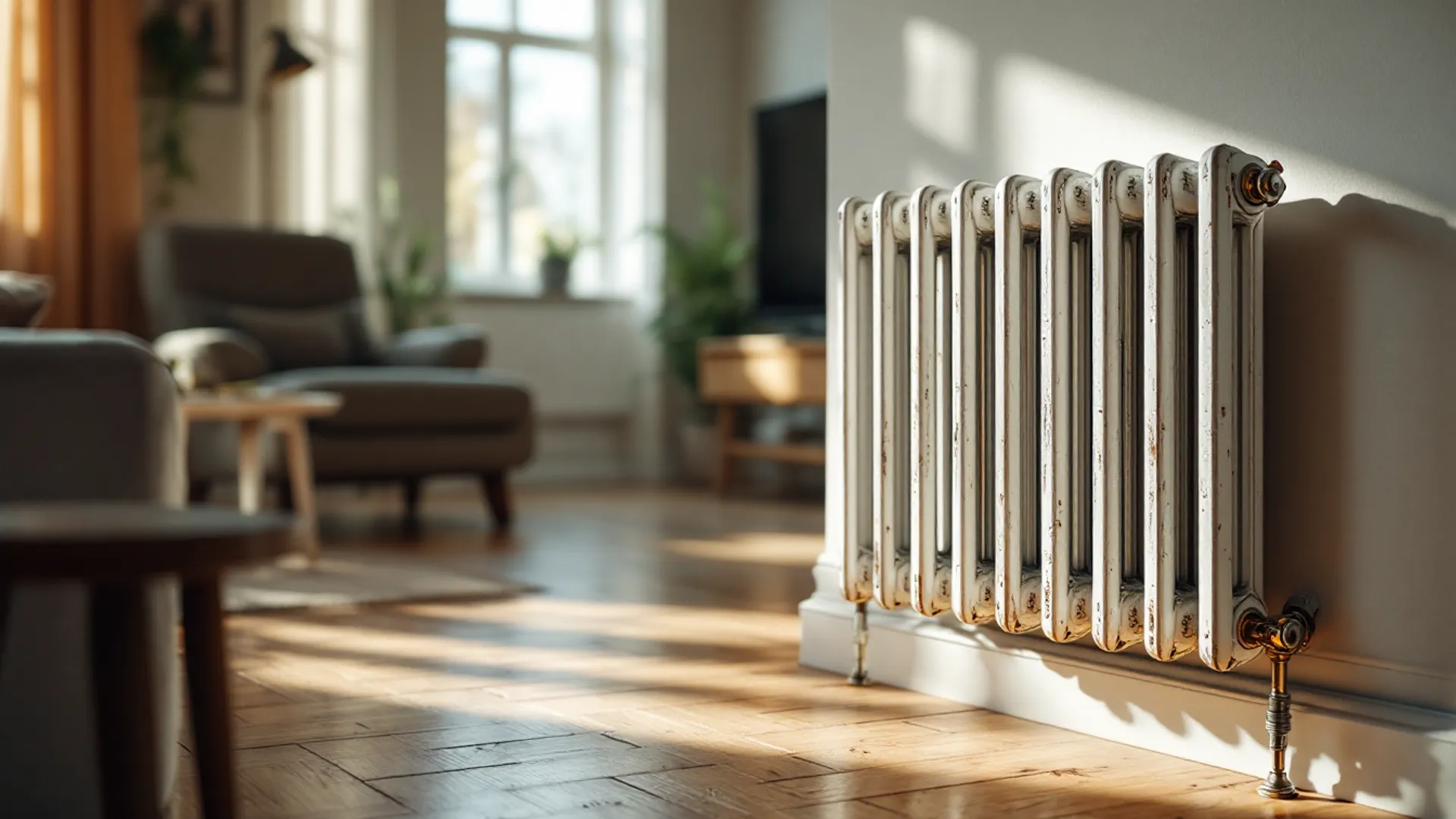
A cold radiator is the most common central heating complaint in UK homes. The good news is that the diagnosis is usually straightforward. The pattern of which radiators are cold and which are hot tells you most of what you need to know before touching anything. Here’s the systematic approach.
If the pattern points to sludge across several radiators, the likely fix is a central heating powerflush. If the problem is air, a valve or balancing, a full flush may be unnecessary.
Start with the pattern
However, before doing anything, note the pattern of which radiators are cold and which are warm. This is the most diagnostic information available:
- All radiators cold = boiler or pump problem, or system fault
- Some cold, some hot = balancing, zoning, or individual radiator fault
- All radiators cold at top only = air throughout the system — bleed all radiators
- Radiators cold at bottom = sludge in the radiator or wider system — powerflush may be needed
- One specific radiator cold all over = isolated valve or localised sludge problem
- Radiators furthest from boiler consistently cooler = balancing or pump issue
Fault type 1: Cold at the top (air in the radiator)
Cause: Additionally, air trapped in the top of the radiator forms a cold pocket. Hot water circulates below the air bubble, so the bottom of the radiator is warm but the top stays cold.
Fix: Specifically, bleed the radiator. This is a simple DIY task — see our complete bleeding guide for the step-by-step process. After bleeding, re-check boiler pressure and top up via the filling loop if it’s dropped below 1 bar.
Recurring air: For example, if you need to bleed the same radiator every few weeks, air is entering the system faster than normal. Investigate: small leak in the system (causing pressure drops), incorrect inhibitor level (low inhibitor allows corrosion that generates hydrogen gas), or a failed micro-bore connection allowing air ingress.
Fault type 2: Cold at the bottom (sludge)
Cause: As a result, black iron oxide sludge (magnetite) settles at the bottom of radiators. It accumulates over years from corrosion of steel radiators and unprotected pipework. The lower half of the radiator fills with sludge that can’t circulate and doesn’t heat.
Confirmation: Meanwhile, knock the bottom of the radiator — a sludge-filled radiator sounds dull and dense compared to a clear metallic ring. The radiator may also be noticeably heavier than expected. If black water appears when you bleed the radiator, sludge is very likely.
Check the scale of the problem: One radiator cold at the bottom can sometimes be removed, flushed outside and refitted. Several radiators cold at the bottom, slow warm-up throughout the home, dirty bleed water or a noisy boiler point to whole-system contamination.
Fix: Furthermore, whole-system sludge needs a professional powerflush. The engineer connects a high-flow machine, circulates cleanser, flushes each radiator circuit, captures magnetite through filtration and refills with inhibitor. See what a powerflush involves before booking.
Prevention: In particular, magnetic filter fitted at the boiler return, inhibitor maintained at correct level.
Fault type 3: Completely cold (no circulation)
Consequently, a radiator that’s cold throughout — not just cold at the top or bottom. But The same temperature as the room — has no hot water circulating through it.
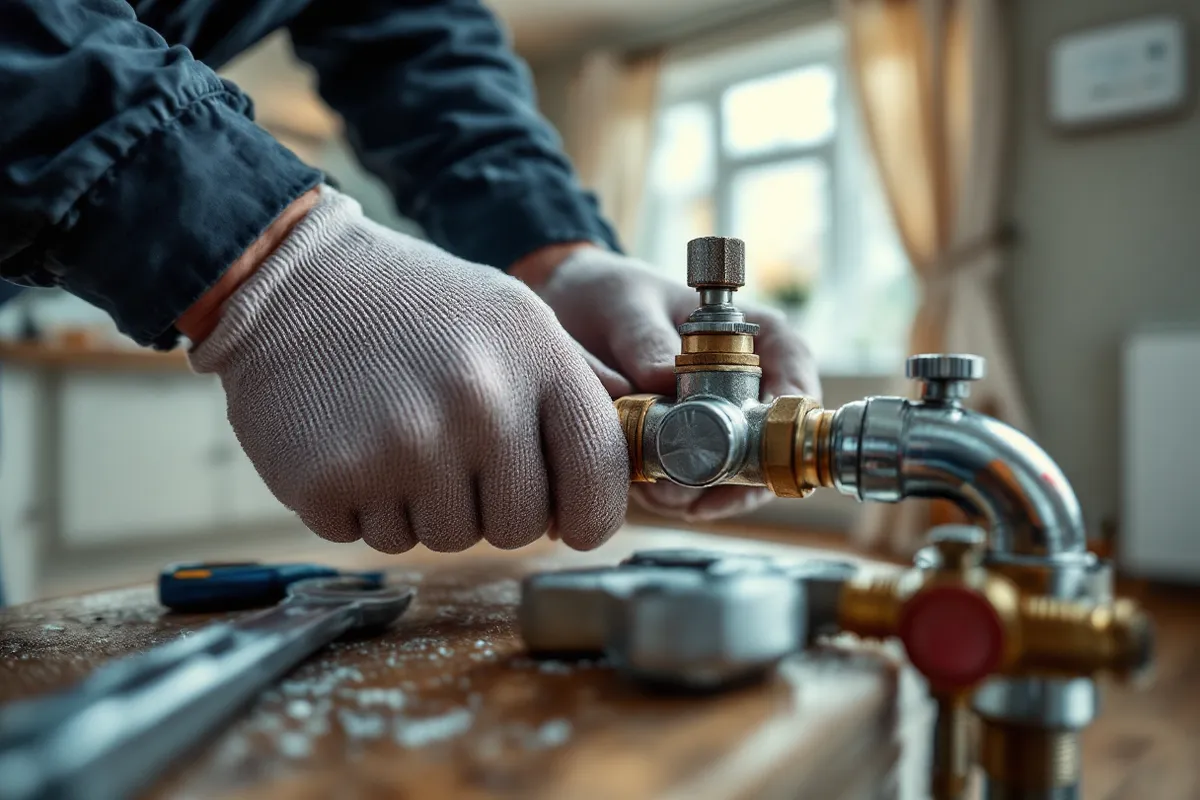
Check 1: Thermostatic Radiator Valve (TRV): Similarly, most modern radiators have a TRV on the flow pipe (usually the inlet at the bottom left or bottom right). Turn it up — if it was set to minimum (snowflake setting), this may simply be why it’s cold. Also check the pin inside the TRV head isn’t seized: remove the TRV head (usually a twist-off cover) and press the pin. If it doesn’t spring back, it’s stuck in the closed position — free it with a small spanner or pliers.
Check 2: Lockshield valve: Moreover, the valve on the other side of the radiator (a small cap that covers a valve spindle) may have been fully closed. Remove the cap and turn the valve clockwise to check — if it opens, the radiator was intentionally or accidentally isolated.
Check 3: Zone valve fault: However, if multiple radiators on one side of the house or one floor are cold, a motorised zone valve may have failed in the closed position. Zone valves are typically fitted near the boiler or in the airing cupboard. A plumber can diagnose and replace a faulty zone valve.
Fault type 4: Radiators cold when hot water works (combi boiler)
Cause: Additionally, on a combi boiler, the diverter valve switches between heating and domestic hot water. A failed diverter valve stuck in the DHW position means the boiler continues producing hot water but doesn’t divert it to the heating circuit.
Signs: Specifically, hot water from the tap works fine; radiators are cold even with the thermostat turned up and the programmer set to heating mode.
Fix: For example, a plumber diagnoses and replaces the diverter valve cartridge (parts plus labour). This is not a DIY repair.
Fault type 5: Last radiators on the circuit cooler
Cause: As a result, the last radiators on the pipe run receive flow last and may be noticeably cooler than those nearest the boiler. This is a balancing issue — the flow through the system isn’t distributed evenly.
Fix: Meanwhile, balancing involves adjusting the lockshield valves to restrict flow to the nearest radiators, pushing more flow to the further ones. Turn the lockshield valve on the nearest radiators nearly closed; leave the distant ones fully open. This is achievable DIY with patience — but takes some trial and error, and a thermometer to check radiator surface temperatures.
Alternative cause: Furthermore, pump speed too low — the pump isn’t generating sufficient head to push flow to the far end of the circuit. Try increasing the pump speed setting (if accessible).
Fault type 6: Radiator cold after being removed
If a radiator was removed for decorating and has since been refitted and won’t heat:
- Check the connections are secure (leaking joints lose pressure)
- Check TRV and lockshield are open
- Bleed the radiator — a refitted radiator will have trapped air
- Check the boiler pressure — it may have dropped when the system was drained for the removal
If it still won’t heat after these checks, the joints at the new connection points may have been soldered or compression-fitted incorrectly, creating a restriction. A plumber can investigate.
When to book a powerflush rather than a repair
Book a powerflush assessment when:
- Several radiators are cold at the bottom
- The boiler is noisy or kettling
- Radiators heat slowly even after bleeding and balancing
- Bleed water is black or gritty
- A new boiler installer has asked for proof that the system has been cleaned
- Pumps, valves or heat exchangers keep failing early
Do not book a powerflush as the first fix for a single radiator cold at the top, one stuck TRV, or a boiler that will not fire. Those need different checks first. If cost is the main concern, use the powerflush cost guide to compare quotes.